
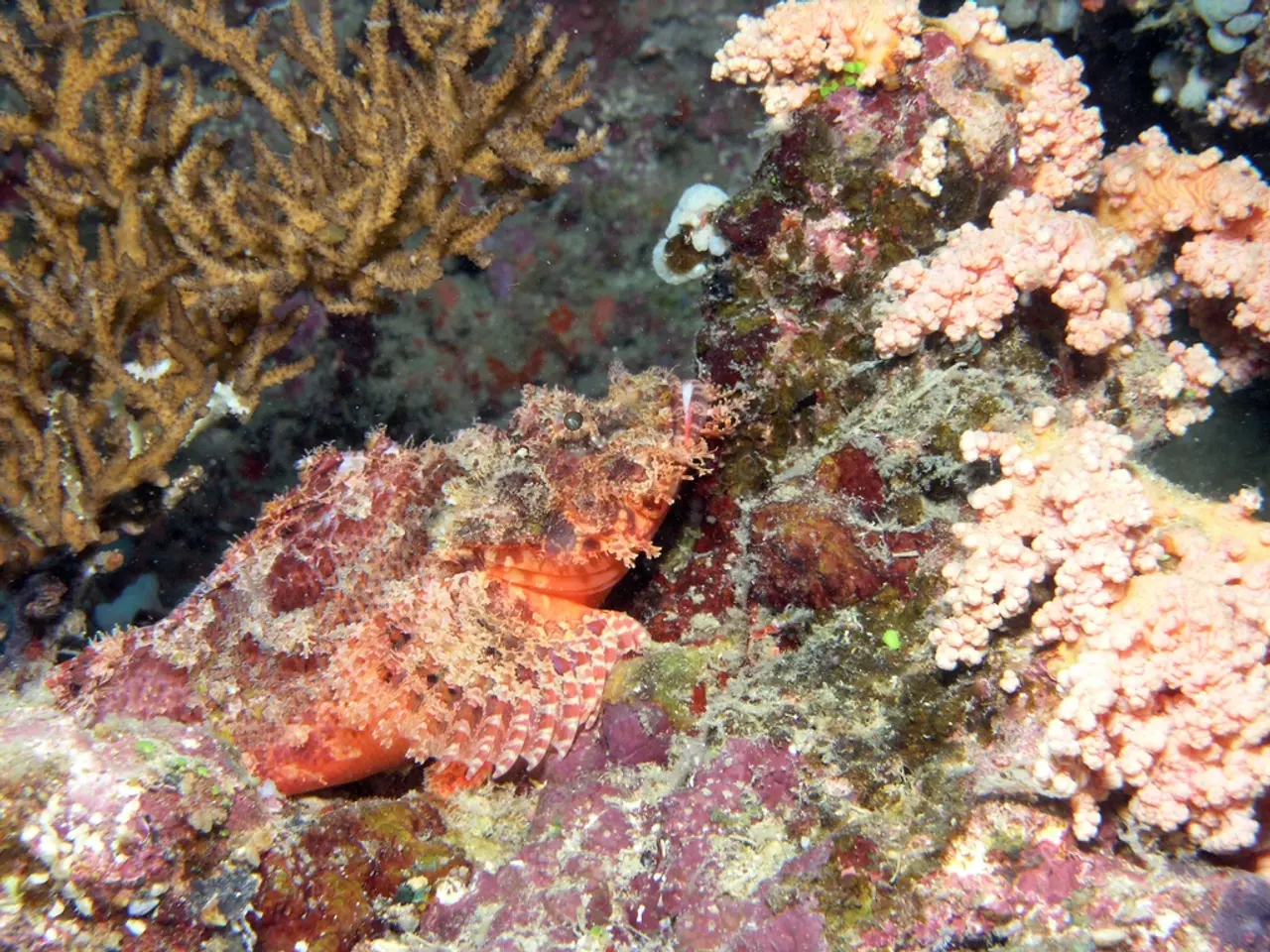
"A deeper blue in the ocean indicates a lack of marine life"
The European Union (EU) has launched two research projects, "Redress" and "Life Matters," to combat the effects of climate change on the Mediterranean Sea. These projects aim to restore the seabed and marine life in the region, as scientists warn of the formation of underwater deserts.
Climate change is causing the Mediterranean Sea to warm up faster due to its shallowness. This rapid warming has led to a significant decrease in Neptune grass, other algae, and oyster reefs, as well as a decrease in the pH value of the sea. This decrease in pH affects corals, sea urchins, sea sponges, algae of all kinds, and Posidonia algae (Neptune or seagrass).
The disappearance of this diversity in the water affects the life of fish and large marine creatures, posing a significant risk to marine ecosystems. For example, sperm whales and other large marine creatures are at risk due to the decline of plankton populations, forcing them to swim up to 10,000 kilometers to find food.
Underwater flora and fauna in the Mediterranean Sea are suffering significantly. Roberto Danovaro, a professor of marine biology at the University of Ancona and a researcher involved in the EU projects "Redress" and "Life Matters," has stated that the change in the underwater world is not registered or understood.
The Mediterranean Sea provides a habitat for almost 8% of all marine species, making it a biodiversity hotspot. However, longtime snorkeling enthusiasts have noticed changes in the Mediterranean underwater world, including less dense Neptune grass, fewer oyster beds, and the presence of species like pufferfish and firefish.
Data collection is a significant part of the EU projects. Preliminary results show a 30% decrease in Neptune grass areas, up to 80% decrease in other algae, and even more significant decreases in oyster reefs in the Mediterranean.
The bluer the Mediterranean Sea appears, the more lifeless it is. In early August, the sea off Genoa had a surface temperature of 29 degrees, with some regions reaching up to 30 meters deep. The maximum surface temperature in the Tyrrhenian Sea between Sardinia and the mainland increased by an average of 1.9 degrees between 2015 and 2024.
The pH value of the Mediterranean Sea has decreased three times as much as in the oceans over the course of a century. This rapid change is a cause for concern, as restoring the sea is not about repairing like a car, but about restoring complex ecological interactions to help the sea retain its emerald green color.
The seas and oceans absorb a third of the greenhouse gases produced by humans, thanks to algae and microorganisms. By restoring the Mediterranean Sea, we are not only preserving a biodiversity hotspot but also contributing to the fight against climate change. Ocean researchers are warning of the danger of desertification, the formation of deserts, in reference to the decline of life in the underwater world. It is crucial that we act now to protect and restore the Mediterranean Sea.
Read also:
- Understanding Hemorrhagic Gastroenteritis: Key Facts
- Stopping Osteoporosis Treatment: Timeline Considerations
- Tobacco industry's suggested changes on a legislative modification are disregarded by health journalists
- Expanded Community Health Involvement by CK Birla Hospitals, Jaipur, Maintained Through Consistent Outreach Programs Across Rajasthan








