
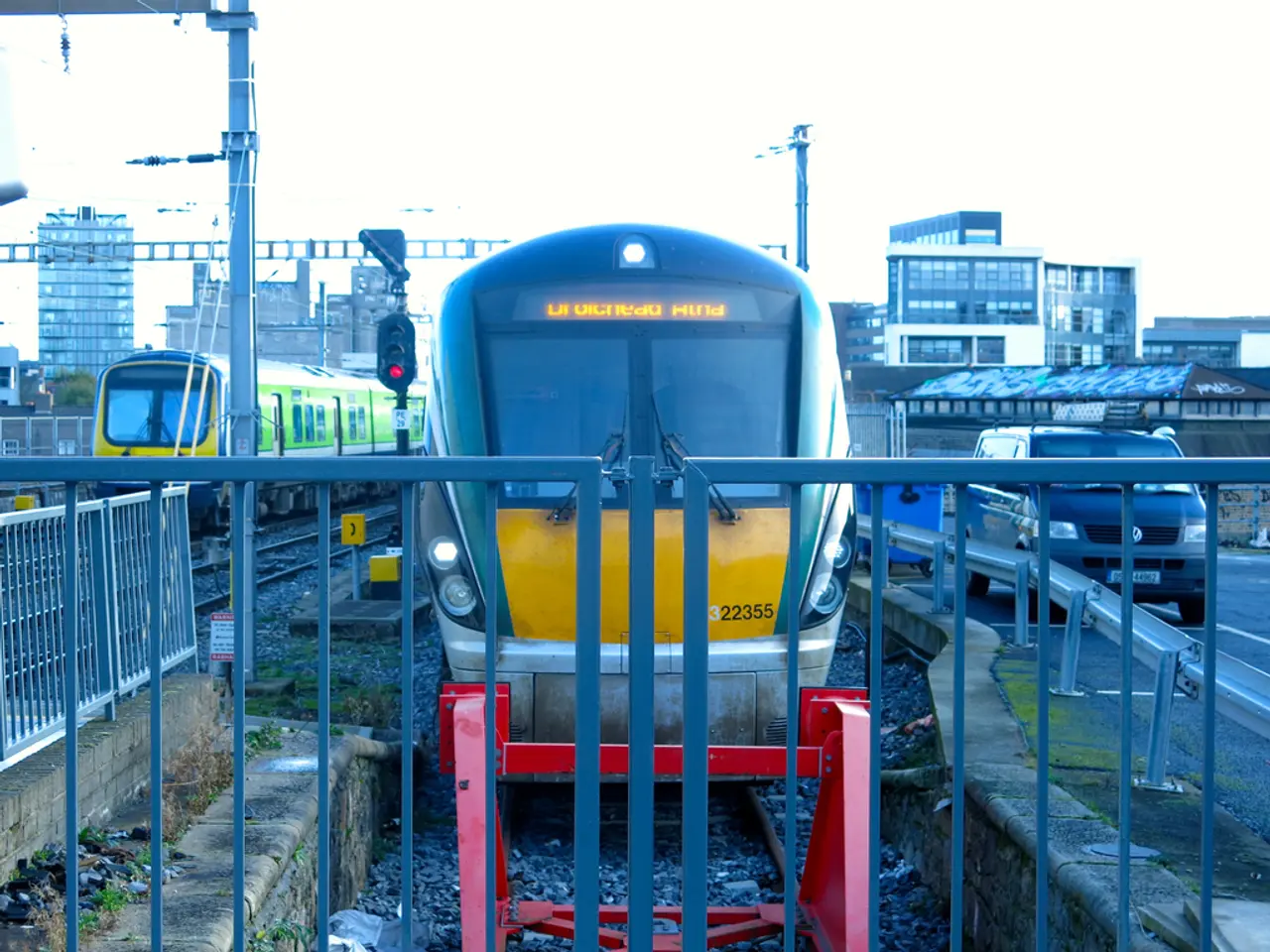
Ensuring Safety and Protective Measures in Place
In the ever-evolving landscape of public transportation, the importance of safety and security remains paramount. Transit systems continue to be attractive targets for terrorists due to their pedestrian traffic, a fact that underscores the need for vigilance and robust security measures.
The American Public Transportation Association (APTA) is at the forefront of these efforts. Polly Hanson, the director of security risk and emergency management for APTA, has been emphasizing the importance of rail crossing safety education for every generation. This initiative aims to reduce accidents and fatalities at rail crossings, a concern that has seen a significant rise in recent years.
One of the key initiatives to enhance safety is the implementation of Positive Train Control (PTC) systems. As of June 2018, 85% of on-board equipment on locomotives and cab cars had been PTC-installed, and 79% of wayside installations for PTC had been completed. Furthermore, 78% of back office control systems were ready for operation, and 91% of the needed radio spectrum for PTC had been acquired, with the remaining expected by the end of October.
However, the industry still faces challenges. Transit security grant funding has decreased, making it challenging for agencies, especially smaller and mid-size ones, to equip and operate effectively. Cybersecurity is another growing concern, with online ticketing and fare collection systems being vulnerable to hackers. To address these issues, APTA has been proactive. The TSA and FBI conducted a workshop on cybersecurity for APTA's CEO members earlier this year, and cybersecurity and enterprise risk management sessions have been included in every APTA conference this year.
PTC implementation also requires additional manpower. Transit agencies will need integration and testing engineers, as well as administrative staff for FRA approvals during the implementation phase. As of June 2018, 34% of commuter railroads were in testing, revenue service demonstration, or already operating trains with PTC.
The increase in rail crossing trespasser fatalities is a concerning trend. Some of these incidents are intentional, while others are accidental. To combat this, APTA has been working with Operation Lifesaver, a non-profit organization dedicated to reducing collisions, fatalities, and injuries at highway-rail crossings and trespassing on or near tracks.
In a recent article, Polly Hanson attributed the increase in fatalities to factors such as a rise in suicides, new rail services, and the influence of social media on dangerous behavior. To address this, SEPTA (Southeastern Pennsylvania Transit Authority) has participated in Worldwide Suicide Prevention Day and posts signs at stations with a number for passengers who may be feeling suicidal.
As the deadline for PTC implementation approaches (December 31, 2020), it is clear that the transit industry is taking these challenges seriously. APTA has groups focused on developing cybersecurity standards and enterprise risk management practices for the transit industry, ensuring that safety remains at the forefront of all decisions.
Read also:
- Understanding Hemorrhagic Gastroenteritis: Key Facts
- Trump's Policies: Tariffs, AI, Surveillance, and Possible Martial Law
- Expanded Community Health Involvement by CK Birla Hospitals, Jaipur, Maintained Through Consistent Outreach Programs Across Rajasthan
- Abdominal Fat Accumulation: Causes and Strategies for Reduction








