
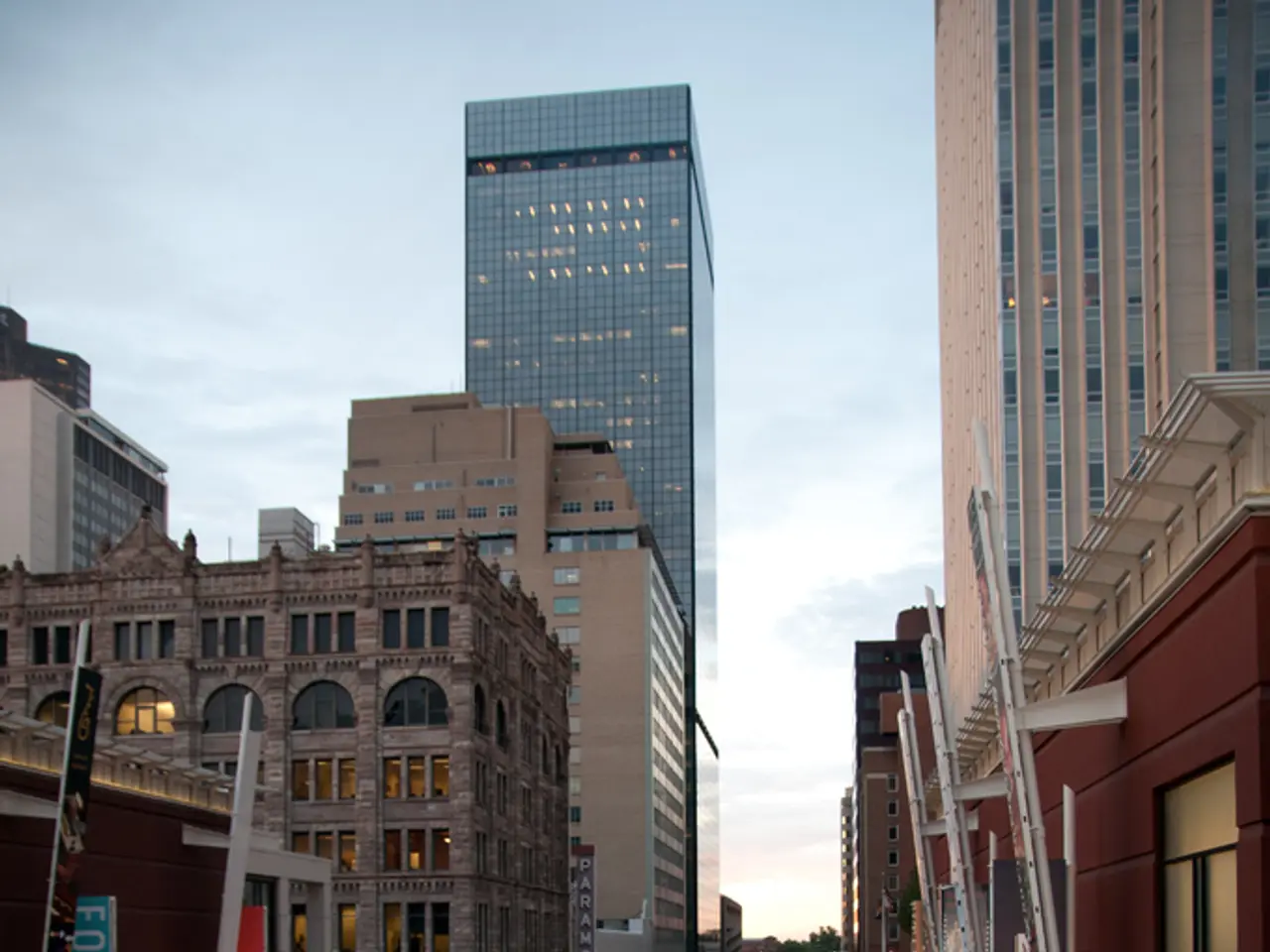
High-end properties replacing budget accommodations in prime property markets
In a report published by the National Low Income Housing Coalition (NLIHC), it was revealed that the United States now requires 7 million affordable rental homes to alleviate the current housing shortage. This figure underscores the urgent need for a large-scale, sustained commitment to programs that provide affordable housing for people with the lowest incomes, in order to tip the scales towards housing justice.
The rapid growth of certain regions across the country further exacerbates the housing affordability issue. Maricopa County in Arizona, the fourth largest county in the country and the fastest growing, with over 700,000 new residents since 2010, is one such area.
Two cities that experienced population growth both before the pandemic and during its course also boasted the most luxury apartments, according to a search on Apartments.com conducted on Aug. 31. This trend is concerning, as the private market alone cannot solve the housing affordability crisis, as noted by the NLIHC.
The financial crisis of 2008 has led to home prices being higher than ever, forcing many millennials to opt for apartment rentals rather than home ownership. The pandemic has further accelerated this trend, with 2.9 million people moving out of densely populated urban areas in the U.S. between March 2020 and Feb. 2021, according to a study by Pew.
Millennials, many of whom became parents, were attracted to suburban areas near bigger metro areas during the pandemic, Pew's research found. However, the affordability issue persists, with 5.5 million renter households being behind on rent as of March 2022, as reported by the NLIHC.
Government organizations' help during the early stages of the pandemic, such as eviction moratoriums and funding from Congress' Emergency Rental Assistance, have run out. Consequently, no state has an adequate supply of affordable and available housing for these renters, according to the NLIHC report.
The report also highlighted the disproportionate impact of housing disparities on people of color, who are more likely to be renters and have low or extremely low incomes. States that saw an increase in population during the pandemic, such as Colorado's Denver County and Multnomah County in Oregon (which houses Portland), also had the highest percentage of people with extremely low incomes and the least amounts of available and affordable housing.
Despite these challenges, certain regions have seen a rise in housing prices above their respective state averages in recent years. Munich, Germany, for instance, has experienced significant growth in apartment prices, with a year-on-year increase of +5.1% for condominiums and +7.2% for multifamily houses as of September 2025. Other major cities with price increases above average include Düsseldorf, Stuttgart, Berlin, and Dresden.
However, it's important to note that despite affordable housing being hard to find, these states were often cheaper than the major metropolitan areas that movers were coming from, as a 2022 study by Pew found. Florida, Texas, Arizona, South Carolina, and North Carolina saw 30% higher inbound moves than average in 2020.
As we navigate this ongoing housing affordability crisis, it's crucial to remember the urgent need for comprehensive, sustainable solutions that prioritize affordable housing for all.
Read also:
- Understanding Hemorrhagic Gastroenteritis: Key Facts
- Stopping Osteoporosis Treatment: Timeline Considerations
- Trump's Policies: Tariffs, AI, Surveillance, and Possible Martial Law
- Expanded Community Health Involvement by CK Birla Hospitals, Jaipur, Maintained Through Consistent Outreach Programs Across Rajasthan








