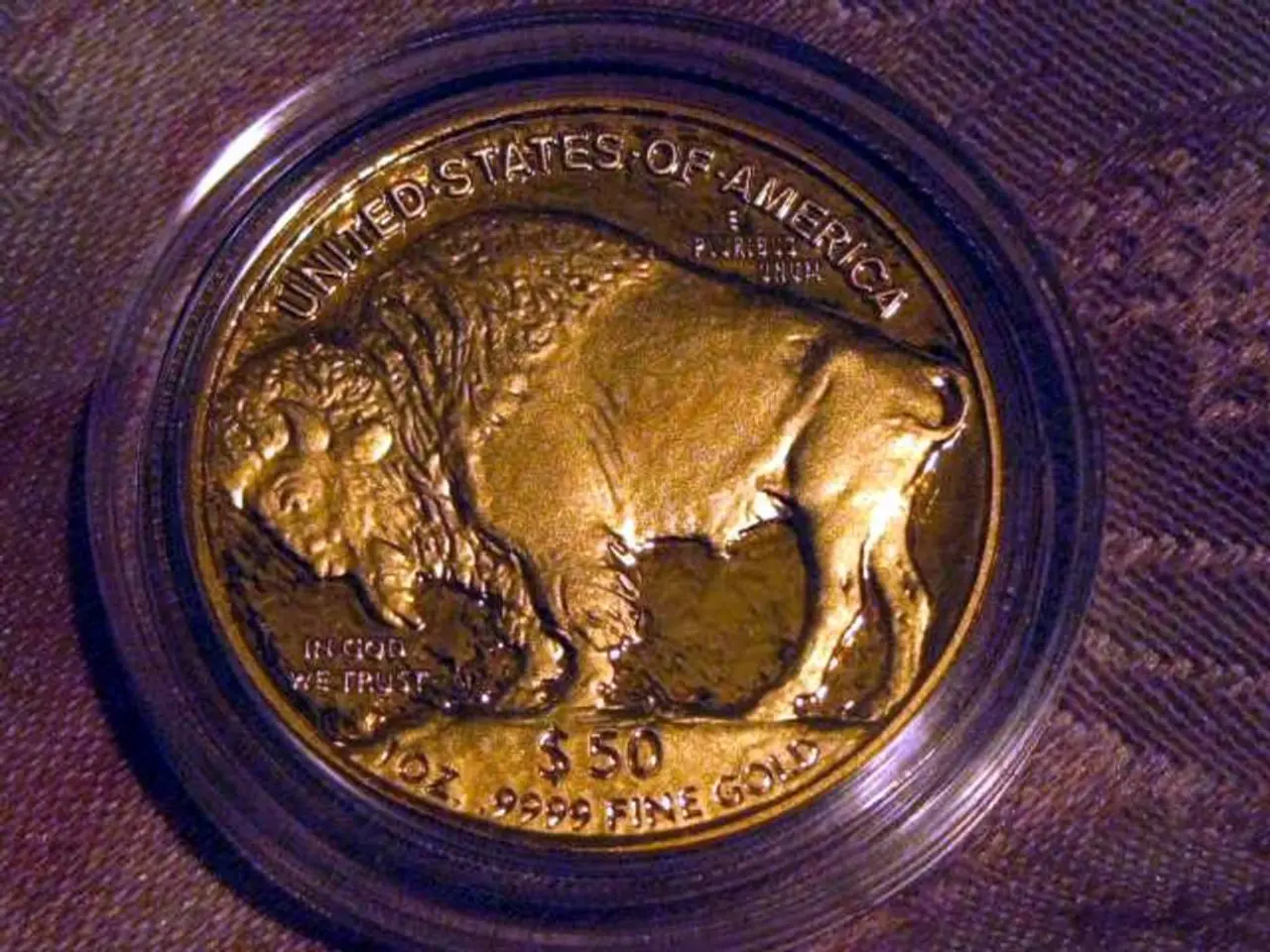
Is Bitcoin truly becoming the modern equivalent of gold?
In the world of finance, two assets have been grabbing headlines for their unique characteristics and potential: Bitcoin and gold. While both have their own merits and drawbacks, they offer investors distinct opportunities.
Firstly, it's important to note that the Bitcoin market is significantly smaller than that for gold, contributing to its high price volatility. The production of both assets significantly impacts the environment, but Bitcoin, existing exclusively in the digital realm, has a lower physical footprint compared to gold mining.
The supply of both assets is limited – a key factor that drives their value. While gold has been around for thousands of years, Bitcoin was launched on January 3, 2009, offering a relatively short history and trust. This limited history and trust can lead to Bitcoin's volatility, as opposed to gold, which can be considered a long-term store of value despite its volatility.
Both assets can be acquired anonymously to some extent, making them attractive to some investors. However, Bitcoin's anonymity makes it attractive to unscrupulous or criminal market participants, which could be a concern for serious wealth managers. Gold, on the other hand, is treated as an asset class like any other in the United States, with a focus on generating returns rather than storing value or providing portfolio stability.
Influential figures like Coinbase CEO Brian Armstrong, Twitter co-founder Jack Dorsey, and investor Cathie Wood have publicly expressed extremely bullish views on Bitcoin. Armstrong and Dorsey have predicted a price of one million dollars by 2030, while Wood's Ark Invest has even projected 3.8 million dollars due to growing institutional adoption. These statements from influential individuals have contributed to optimism and influenced Bitcoin's price trends.
Gold's total loss is practically impossible, thanks to its long-standing agreement as a precious metal. Its fluctuations are much smaller than those of Bitcoin, making it a more stable investment compared to the digital currency.
The value of gold is mainly driven by the demand for gold ETFs, not primarily by purchases from international central banks. In contrast, Bitcoin largely evades the influence of international central banks, but state restrictions can cause its price to plunge, as demonstrated by reports of China's intended ban on Bitcoin mining causing the price to temporarily drop below $30,000.
Companies' decisions to accept Bitcoin as a means of payment, such as Tesla and PayPal, play a role in recent Bitcoin price gains. These developments, coupled with the optimistic views of influential figures, have contributed to a surge in interest in Bitcoin as an investment option.
Thomas Buckard, a co-founder of MPF, a wealth management firm, and a board member responsible for client acquisition and support, has also weighed in on the topic. Prior to his work at MPF, Buckard worked in private banking at Deutsche Bank.
In conclusion, while both Bitcoin and gold offer unique opportunities for investors, their differences in history, supply, volatility, and influence make them distinct assets. Investors should carefully consider these factors when deciding whether to invest in Bitcoin or gold.
Read also:
- Understanding Hemorrhagic Gastroenteritis: Key Facts
- Stopping Osteoporosis Treatment: Timeline Considerations
- Trump's Policies: Tariffs, AI, Surveillance, and Possible Martial Law
- Expanded Community Health Involvement by CK Birla Hospitals, Jaipur, Maintained Through Consistent Outreach Programs Across Rajasthan