
Portugal implements stricter regulations to ensure beach access for everyone
In a bid to safeguard the public's right to access beaches, the Portuguese government has introduced stricter regulations and enforcement mechanisms along a 45-kilometre stretch of coastline covering Melides, Comporta, and Troia. The new rules aim to ensure that developments do not impede free, direct public access to beaches, eliminating barriers such as detours, ID controls, or fees imposed by private entities.
The mayors of Setúbal, Alcácer do Sal, and Grândola have called for the Troia ferry to be included in the Passe Navegante pass, but it remains excluded. This exclusion has raised concerns about the affordability of beach access for many locals, as monthly fares for the Troia ferry are €99.30, a steep price considering the median monthly income in Portugal is around €1,000.
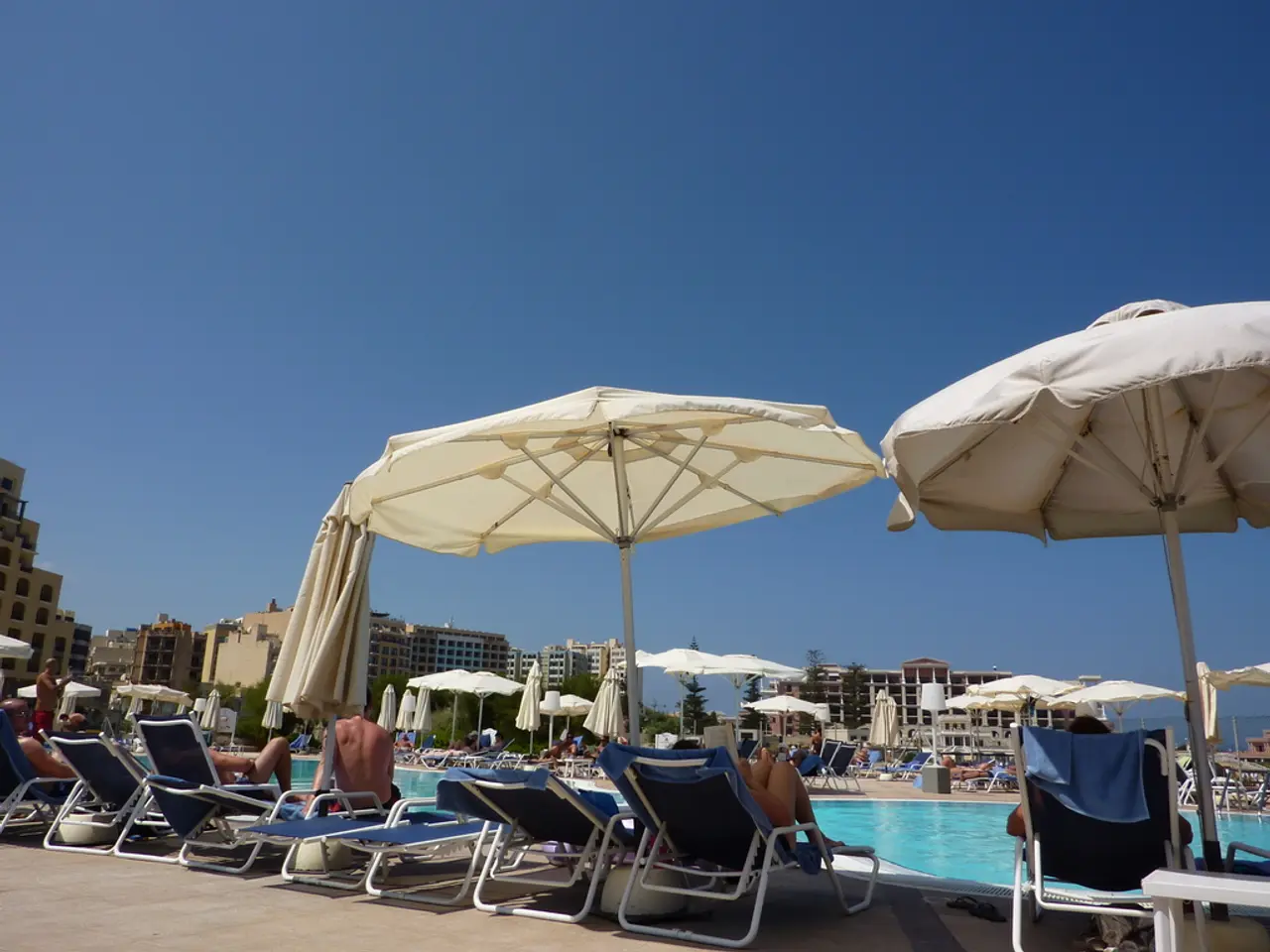
The issue of beach access has become particularly pressing in Comporta, where daily fees for a parasol and chair can reach up to €200. The area, which has become increasingly popular over the past decade, now seems to cater more to the incoming elite, according to local resident Tiago Quintas. English and Spanish are more commonly heard than Portuguese in Comporta, a stark contrast to the past.
The new regulations also address the issue of private resort barriers, such as Gale-Fontainhas, which can only be accessed via the Costa Terra resort. The US real estate investor Mike Meldman owns Gale-Fontainhas, adding to the concerns about the privatisation of coastal access.
The Environment Minister, Maria da Graça Carvalho, has emphasised the importance of maintaining free beach access and opposed any blocking or hindrance. She announced that no new tourist projects will be approved without guaranteed public beach access. The Portuguese government has also promised to enforce stricter measures to protect local communities and businesses affected by luxury resort development.
However, the enforcement of these new regulations is not without challenges. An investigation by the Ministry of Environment was launched at the start of the beach season last month, revealing that nine out of 22 beaches in the area had restricted entry due to adjacent private resorts. Inspectors from the Portuguese Environment Agency (APA) are now pledging tighter enforcement to reverse such limitations and ensure free public beach access.
Despite some setbacks, local communities and activists continue to pressure authorities for stronger protections. The government’s stricter enforcement pledge signals a commitment to act on these concerns, aiming to guarantee that developments allow free, direct public access to beaches without detours, ID controls, or fees imposed by private entities.
The stricter measures also aim to address the loss of public beach access due to projects of national interest (PIN). Geographer Sérgio Barroso reports that 76% of the Grândola National Ecological Reserve has been lost to such projects. The government's commitment to protect local communities and businesses affected by luxury resort development is a step towards ensuring that everyone, including long-time residents like Ana Rodrigues, can continue to enjoy the beaches they loved in their youth.
- In response to the concerns of locals about increased fees and restricted access, the mayors have urged for the Troia ferry to be included in the Passe Navegante pass.
- The exclusivity of the Troia ferry, with monthly fares of €99.30, has raised questions about the affordability of beach access for many locals.
- Comporta, with daily fees for a parasol and chair reaching up to €200, seems to cater more towards the incoming elite, according to local resident Tiago Quintas.
- The new regulations aim to ensure that developments do not impede free, direct public access to beaches, eliminating barriers such as detours, ID controls, or fees imposed by private entities.
- The Environment Minister, Maria da Graça Carvalho, has announced that no new tourist projects will be approved without guaranteed public beach access.
- The Portuguese government has promised to enforce stricter measures to protect local communities and businesses affected by luxury resort development.
- Private resorts, such as Gale-Fontainhas, which can only be accessed via the Costa Terra resort, have come under scrutiny for potential barriers to public beach access.
- The government’s commitment to protect local communities and businesses affected by luxury resort development is a step towards ensuring equal access to beaches for everyone, including long-time residents like Ana Rodrigues.
- Geographer Sérgio Barroso reports that 76% of the Grândola National Ecological Reserve has been lost to projects of national interest (PIN).
- Inspectors from the Portuguese Environment Agency (APA) are now pledging tighter enforcement to reverse such limitations and ensure free public beach access.
- The stricter measures aim to ensure that developments allow for fashion-and-beauty, food-and-drink, home-and-garden, relationships, pets, travel, cars, education-and-self-development, shopping, casino-and-gambling, and sports activities near the beaches to continue unimpeded.
- In their quest for beach access, local communities and activists have shown no signs of relenting, pressing authorities for stronger protections and a lifestyle that respects the rights of all.




