
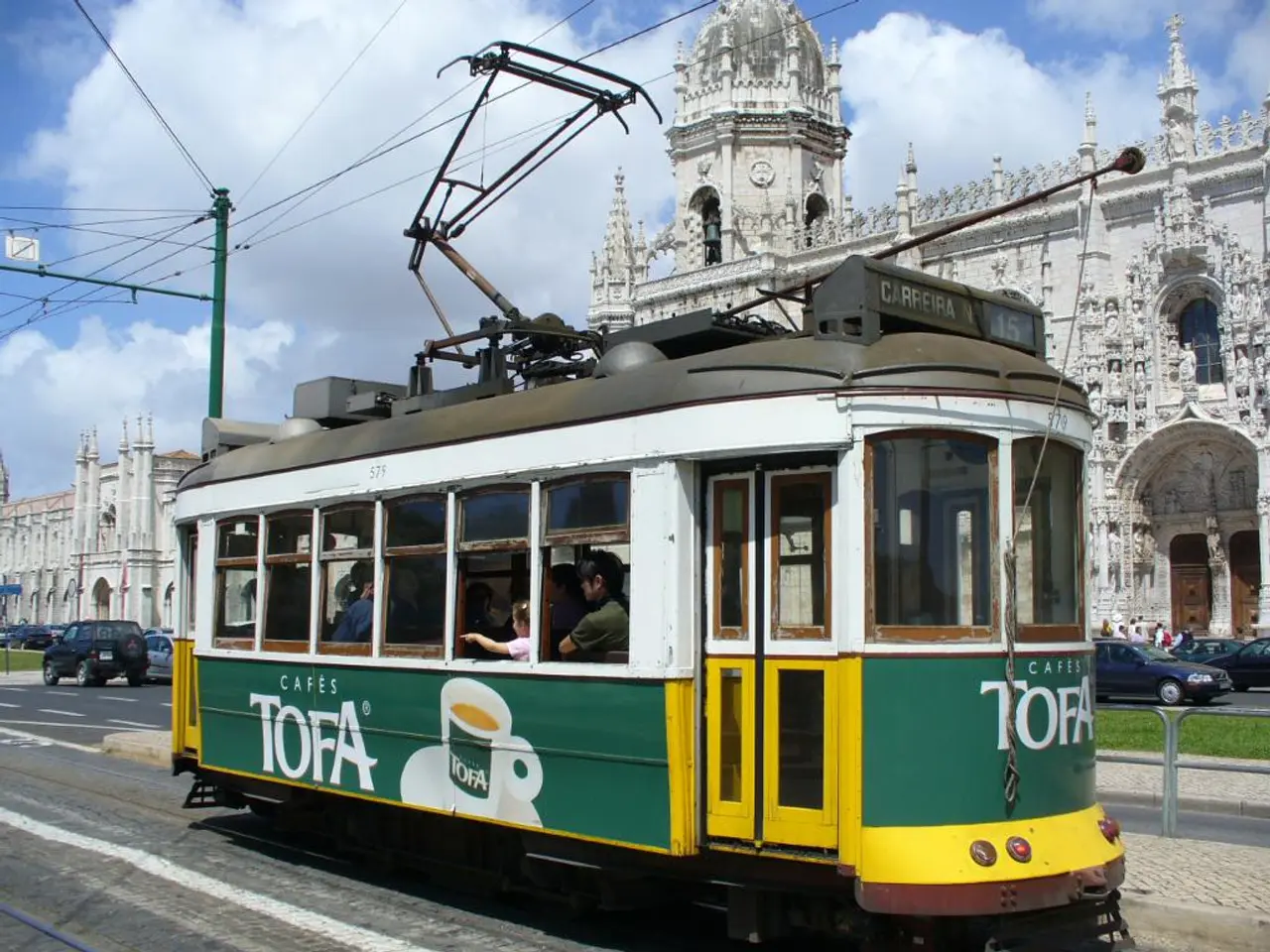
Rail line to Neu-Isenburg, Dreieich, and Langen offers significant prospects
Tram Extension Project in Rhine-Main Metropolitan Region Progresses
The tram extension project, known as Regionaltangente West, is making significant strides in connecting several cities in the Rhine-Main metropolitan region. The project aims to alleviate commuter traffic and promote sustainable mobility, while also offering potential for urban improvements in the city centers of Neu-Isenburg, Dreieich, and Langen.
Mayor Prof. Dr. Jan Werner of Langen has highlighted that the planned route connecting Langen station is economically viable, significantly increasing the profitability of the project. The cost-benefit ratio for this route stands at 2.20, exceeding the minimum threshold of 1.0 for funding by federal and state governments. The shorter connection to Dreieich-Weibelfeld also remains economically attractive with a value of 1.74.
The cities involved in this expansion of the tram system include Bad Homburg, Oberursel, Steinbach (Hochtaunuskreis), Bad Soden, Eschborn, Sulzbach (Main-Taunus-Kreis), Frankfurt Höchst, Neu-Isenburg, and Dreieich (Kreis Offenbach). The feasibility study for this project, involving Neu-Isenburg, Dreieich, and Langen, has a cost of 470,000 euros, with the costs for this study being jointly borne by the cities and traffiQ.
The tram extension project is a significant step towards sustainable mobility in the region, as it combines economic feasibility with urban and ecological opportunities. Mayor Dirk Gene Hagelstein of Neu-Isenburg sees this project as an opportunity for the economic location, improving the business location of Neu-Isenburg and creating an additional rail-based public transport offer.
The planning process for the tram extension project is extensive, involving preliminary planning, creation of operating and financing concepts, and the approval planning process. The first tram is expected to run in 2034.
Mayor Martin Burlon of Dreieich emphasized that rethinking mobility is essential, and the tram is a crucial element in this. Wolfgang Siefert, Mobility Commissioner of the City of Frankfurt, also emphasized the extensive nature of the planning process. Mayor Prof. Dr. Jan Werner of Langen highlighted that the planned route connects important facilities such as the Asklepios Clinic.
The urban improvements planned as part of the project include more space for pedestrians and cyclists, greenery, barrier-free access, and reduced traffic congestion. The project is underway with permits and tunnel construction in progress as of autumn 2024, with construction expected to start around late 2024. No exact overall completion date is provided in the sources.
The tram extension project benefits both citizens and regional municipalities, providing a sustainable and efficient mode of public transport, while also contributing to the urban development of the cities involved. The project is a significant step towards a more sustainable future for the Rhine-Main metropolitan region.
Read also:
- Understanding Hemorrhagic Gastroenteritis: Key Facts
- Trump's Policies: Tariffs, AI, Surveillance, and Possible Martial Law
- Expanded Community Health Involvement by CK Birla Hospitals, Jaipur, Maintained Through Consistent Outreach Programs Across Rajasthan
- Abdominal Fat Accumulation: Causes and Strategies for Reduction








