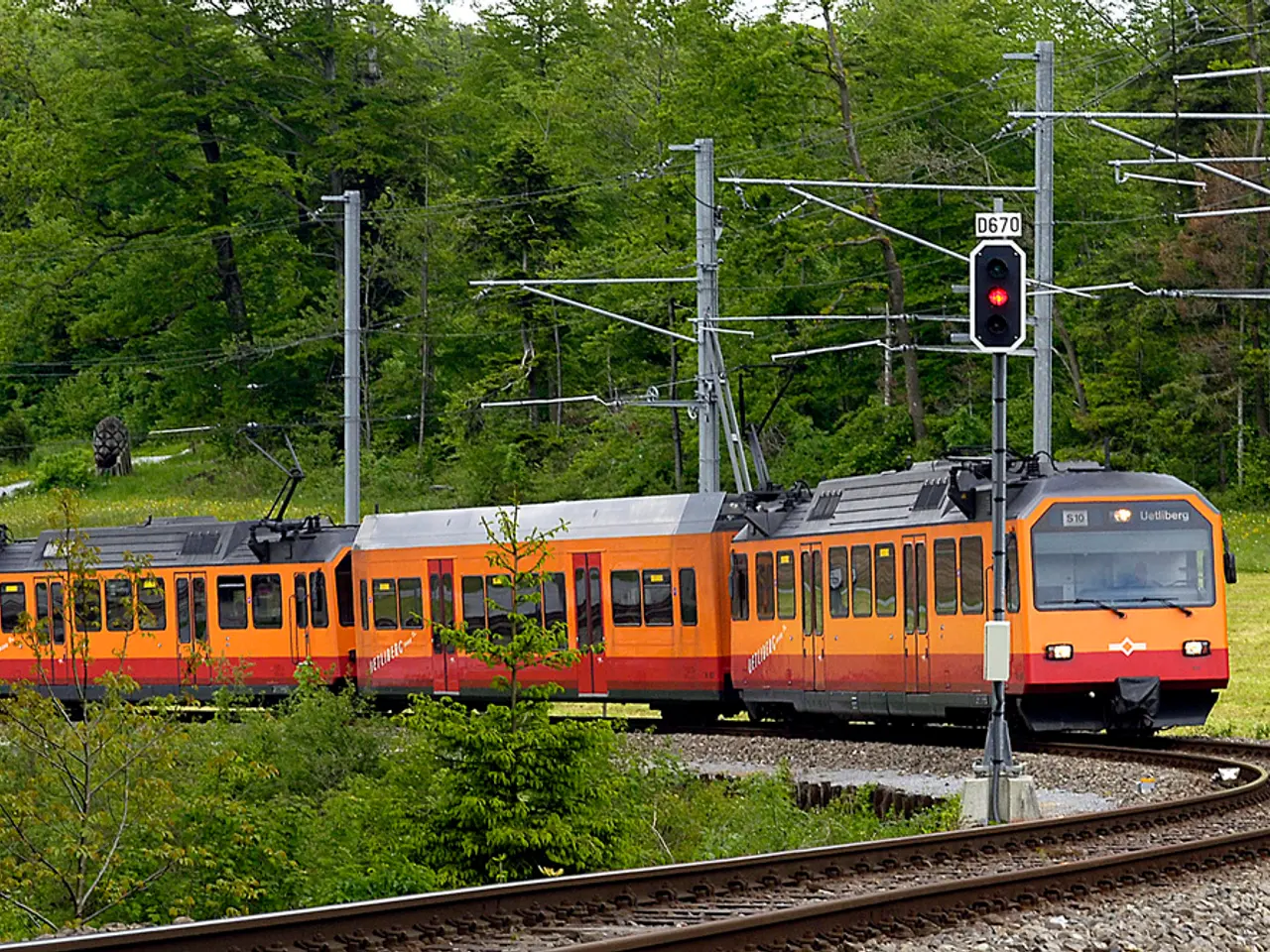
Turkey's national railways initiate solar energy earnings from power plants
Turkish State Railways Embrace Renewable Energy for Sustainable Future
The Turkish State Railways (TCDD) has embarked on a significant shift towards renewable energy, aiming to meet 35 percent of its electricity needs from sustainable sources in the medium term. This ambitious goal is part of a broader initiative to reduce greenhouse gas emissions in rail transportation and contribute to Turkey's energy transformation process.
TCDD has already begun operating solar power plants at four railway installations, with four operational plants and facilities currently under construction generating a combined 318.5 million kilowatt hours of electricity annually. These plants include the initial phase of installations at Balikesir, Selcuk, Basmane, and the Taslica Vehicle Maintenance and Repair Workshop in Gaziantep.
One of the most notable projects is the Marmaray Roof Solar Power Plant Project, which is installing solar panels across 26 train stations along the commuter rail line. Upon completion, these installations will meet 60 percent of Marmaray's energy requirements.
The railway system is also expanding its role beyond transportation to become a leader in environmentally conscious energy policies. TCDD is working on three additional solar facilities with a combined capacity of 200 megawatts in Ankara-Kocahacılı, Sivas-Sarıdemir, and Kahramanmaraş-Narlı.
The solar energy facilities not only meet the energy needs of TCDD but also generate excess electricity for the national grid. This excess electricity provides income to the public through sales, with an estimated 1.5 billion lira ($36M) remaining in the state treasury each year.
The Turkish State Railways has a long-term vision for renewable energy. Upon completion by the end of 2029, renewable energy will supply 25 percent of the electricity needed at TCDD's catenary facilities. The railway network is integrating renewable energy investments directly with rail transport operations, positioning the initiative as a significant contribution to Turkey's broader energy transformation process.
The future preference is for powering catenary systems with renewable energy sources, ensuring a sustainable and secure energy supply. This move also contributes to decarbonization and long-term environmental goals. The railway system's commitment to renewable energy is a testament to its dedication to a greener future for Turkey.
Read also:
- Understanding Hemorrhagic Gastroenteritis: Key Facts
- Stopping Osteoporosis Treatment: Timeline Considerations
- Tobacco industry's suggested changes on a legislative modification are disregarded by health journalists
- Expanded Community Health Involvement by CK Birla Hospitals, Jaipur, Maintained Through Consistent Outreach Programs Across Rajasthan