
What Temperature Could Prove Harmful for Dogs?
As the temperature drops, it's important to remember that our furry friends are also affected by the weather, much like humans. Here are some tips to help keep your dog comfortable and safe during cold weather.
Recognising the Signs
Paying attention to your dog's body language is crucial in identifying signs of discomfort or coldness. Whining, anxious behavior, and refusal to continue walking could all be signs that your dog is too cold. Cold skin, lethargic, sluggish, or clumsy movements, and uncontrollable shivering or shaking are also visible signs of coldness in dogs.
If your dog's lips or skin (often on tips of ears or toes) appear pale, blue, or gray, it could indicate hypothermia. Holding one foot up is a sign of discomfort or pain in a dog's foot, possibly due to cold weather. If something seems off with your dog, don't hesitate to hurry inside, warm up, and call your veterinarian to discuss any concerns.
Protecting Your Dog
If it's too cold for a human, it's probably too cold for a dog. Dogs may look for places to burrow for warmth or look at their owners like they want to come inside when they are cold.
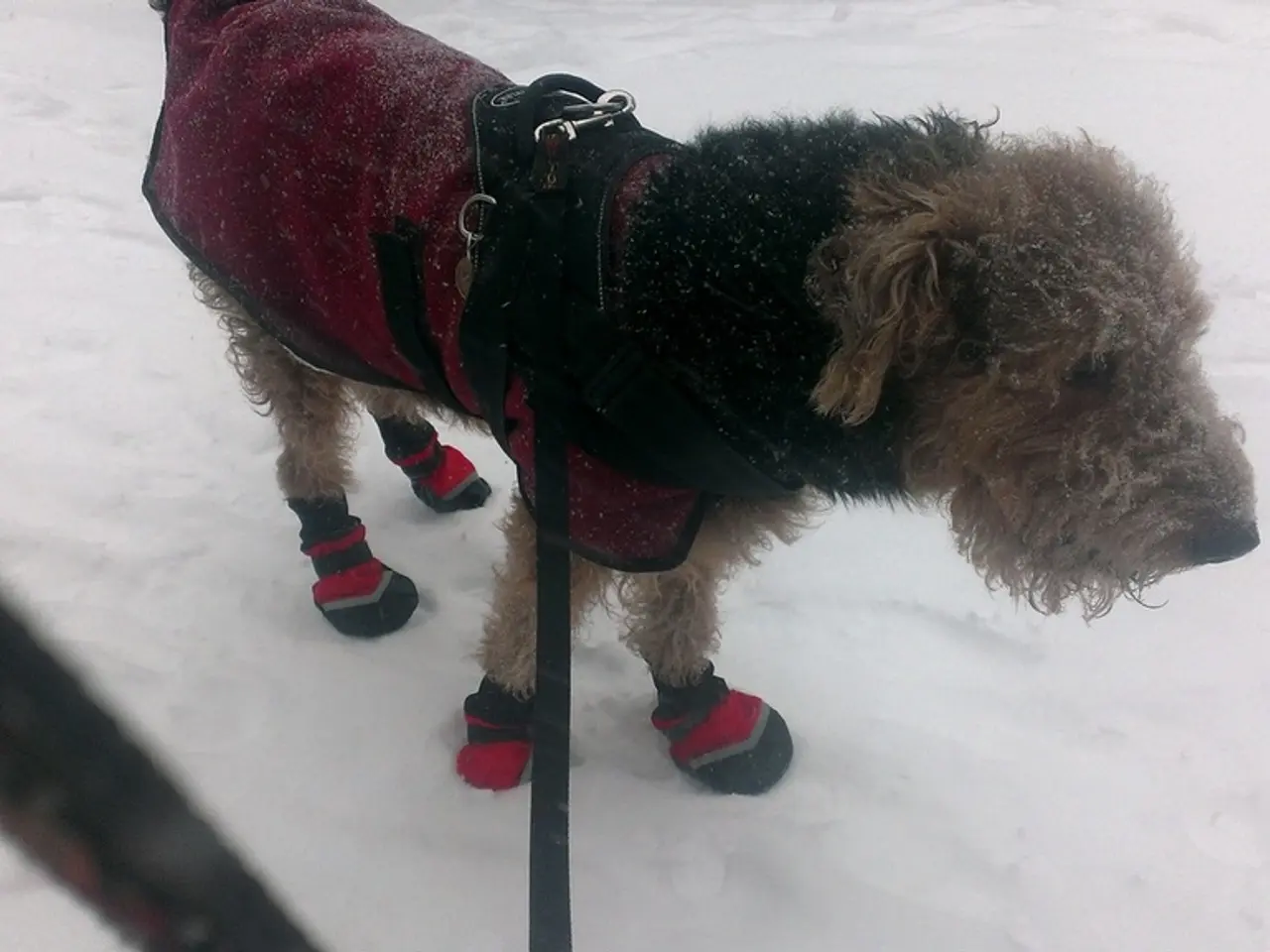
For short-haired breeds or more fragile dogs, dog sweaters can help keep them comfortable during cold weather. Heavy-coated dogs like Siberian Huskies and Alaskan Malamutes can naturally withstand colder temperatures better than short-haired or hairless breeds, but they too can get too cold, especially if their fur gets wet or they're exposed to strong winds.
Protective dog boots with anti-slip soles are recommended for walks on jagged ice. Shoveling mini-walkways through snow for smaller dogs can help protect their paws. Checking a dog's paws for injury, cracked paw pads, bleeding, and ice balls is important during cold-weather walks.
Using Safe De-Icing Agents
De-icing agents used on driveways and sidewalks can be toxic to pets, so it is important to use animal-safe products. Don't let pets lick ice on sidewalks or cleared areas if it looks like a de-icing agent has been used. Wiping down a dog's paws when you get in from a walk can help prevent them from licking chemicals that could put them at risk of poisoning.
Winter Walks
Dogs generally need extra protection against cold when temperatures drop below about 7°C (45°F), with more vulnerable or short-haired breeds requiring protection even above this threshold. Below freezing (0°C or 32°F), protection like coats or limited exposure becomes increasingly important to prevent hypothermia and frostbite.
Waterproof coats and wind-blocking materials can help dogs stay warm during winter walks. Keeping outdoor time brief can help prevent frostbite in dogs.
In conclusion, by recognising the signs of discomfort, providing adequate protection, using safe de-icing agents, and taking care during winter walks, you can ensure your dog stays safe and comfortable during cold weather. If you have any concerns about your dog's health, always consult your veterinarian.
Read also:
- Understanding Hemorrhagic Gastroenteritis: Key Facts
- Stopping Osteoporosis Treatment: Timeline Considerations
- Tobacco industry's suggested changes on a legislative modification are disregarded by health journalists
- Expanded Community Health Involvement by CK Birla Hospitals, Jaipur, Maintained Through Consistent Outreach Programs Across Rajasthan








